
Last updated October 17, 2026
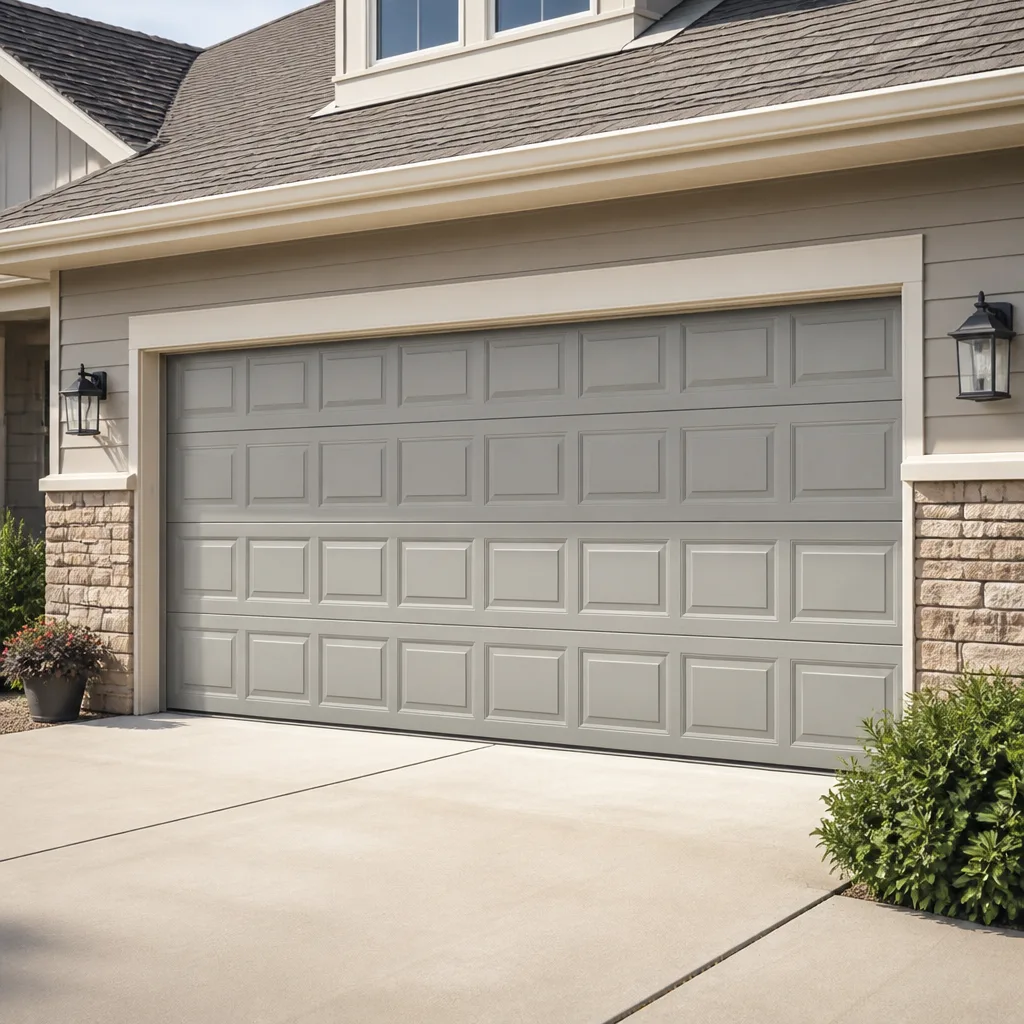 Raised-panel steel
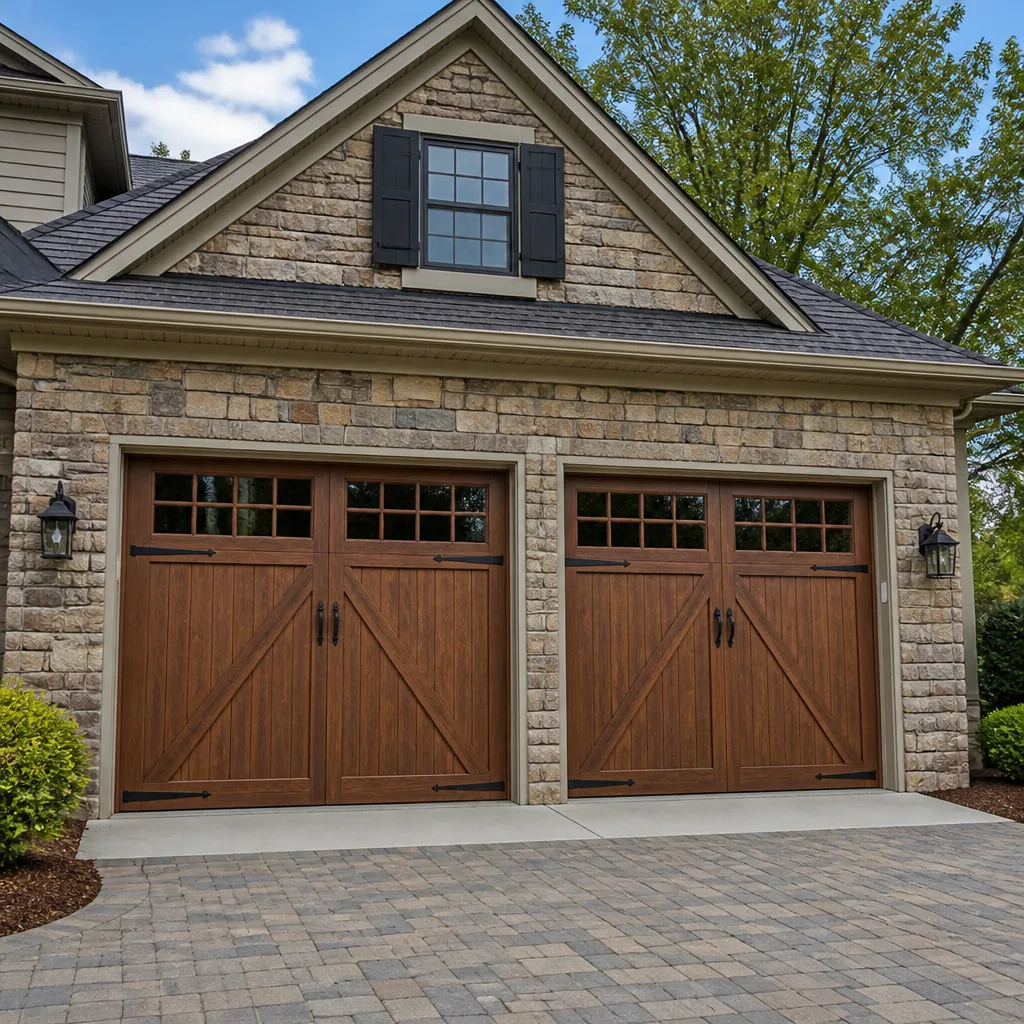 Carriage house
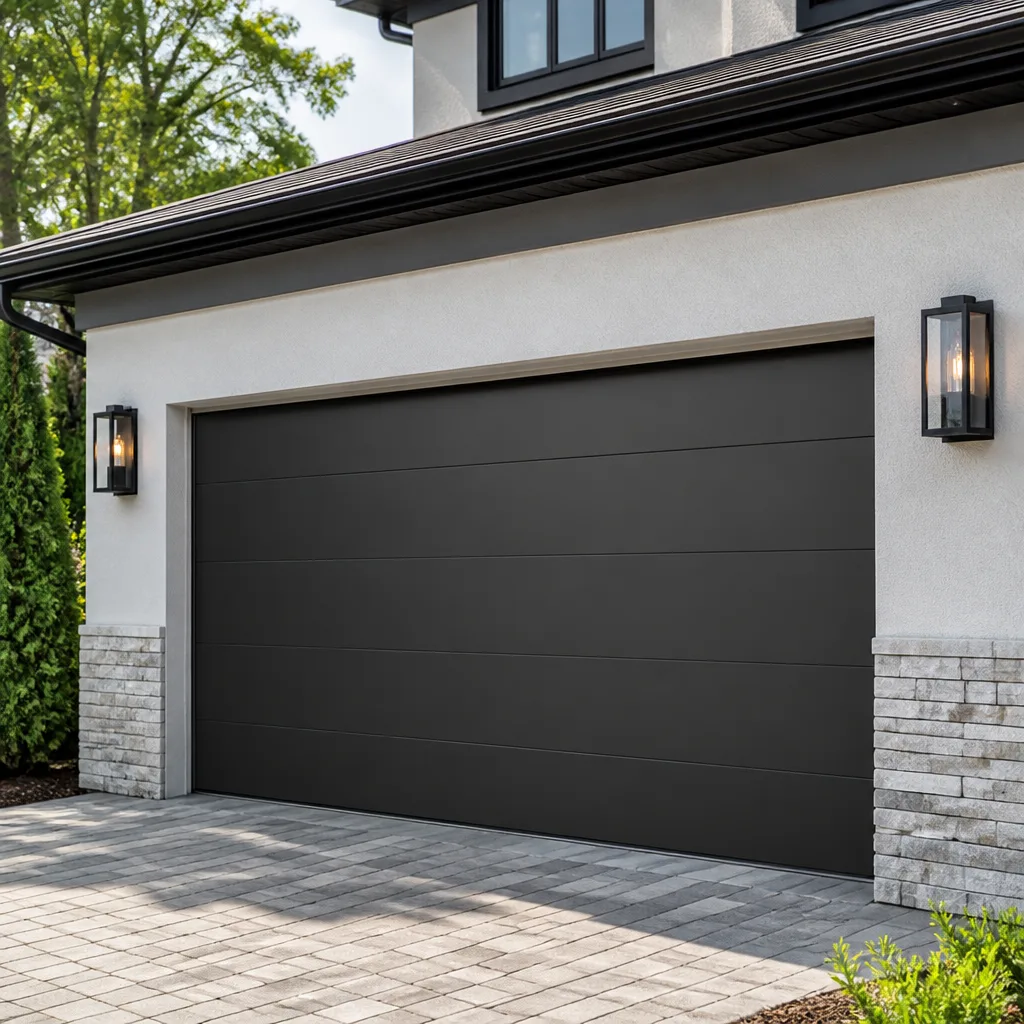 Modern flush
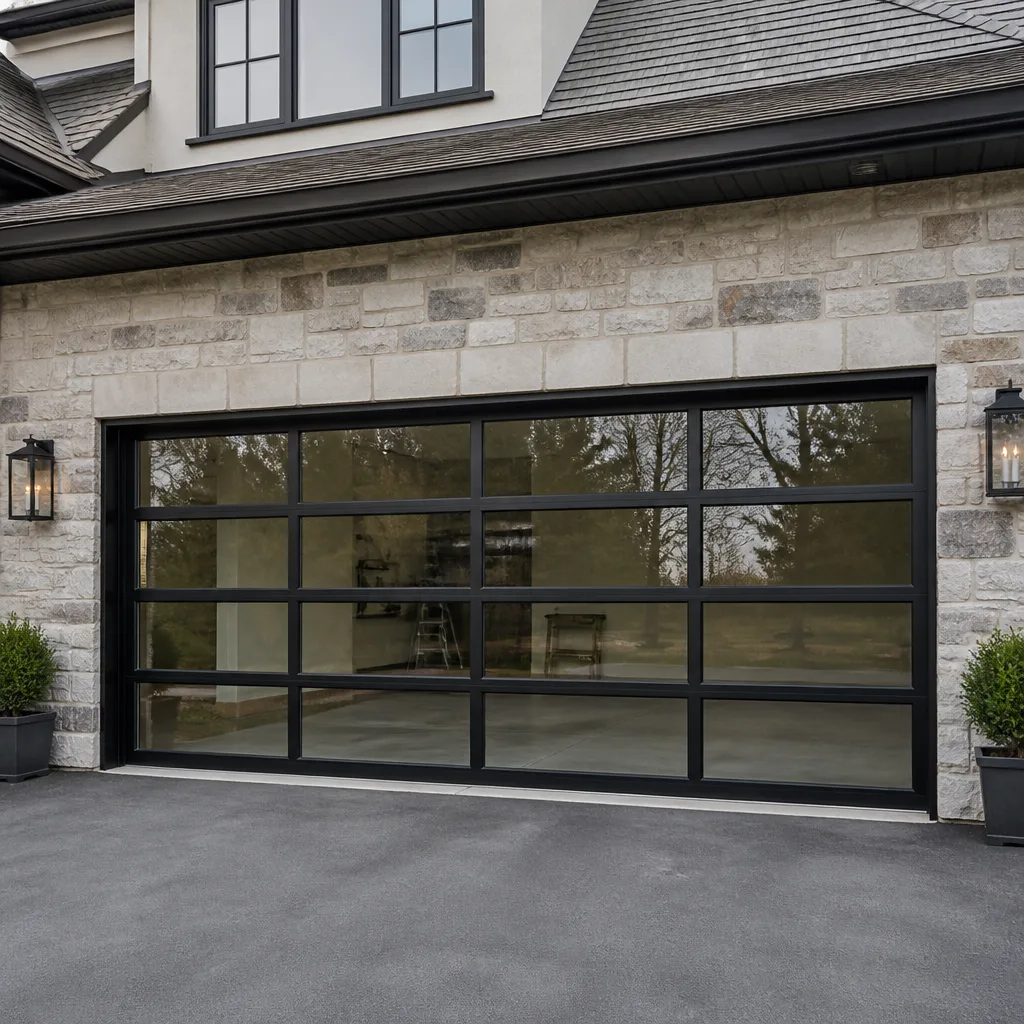 Full-view glass
 LiftMaster openers
 Chamberlain openers
Full 25-point door and opener safety check with every visit - springs, cables, rollers, tracks, and your LiftMaster or Chamberlain opener included
You get a price before we start. It does not change when the truck arrives.
Get your free estimateDIY vs Professional Garage Door: The Henderson Homeowner’s Decision Guide
A torsion spring on a double-wide garage door stores enough energy to lift roughly 300 pounds of door through its travel cycle. When it releases improperly, that force does not dissipate gently. It travels through the winding bars, the ladder, and whatever happens to be in the way, including wrists, forearms, and skulls. In our years serving homeowners in Henderson, the calls we receive after a do-it-yourself spring attempt are rarely about the door still being broken. They’re about what broke in the person holding the tools.
This guide walks Henderson homeowners through the exact line between jobs worth doing with a wrench on a Saturday morning and jobs worth calling a professional for, with specific cost comparisons, tool requirements, and the local weather factors that change how garage doors behave in southern Nevada.
Quick Answer
Garage door tasks that involve cleaning, lubrication, weatherstripping, sensor realignment, and remote programming are generally safe and effective for a careful Henderson homeowner to handle. Tasks that involve torsion springs, lift cables, track adjustments, or panel structure require specialized tools, stored mechanical energy, and precision alignment that make professional service both safer and ultimately less expensive for most households.
Styles & brands we work with
Table of Contents
- The Physics Line: What Actually Makes a Job Dangerous
- DIY-Appropriate Tasks: What a Careful Homeowner Can Handle
- Professional-Required Tasks: Where the Physics Says No
- Real Cost Comparison for Henderson Homeowners
- How Henderson Heat Changes Garage Door Work
- The Safety Baseline: Tools and Equipment Before You Start
- After a Failed DIY: What to Tell the Technician
- Common Mistakes to Avoid
- When to Call a Professional
- Frequently Asked Questions
The Physics Line: What Actually Makes a Job Dangerous
The distinction between a safe weekend project and a hospital-adjacent gamble on a garage door is not skill, confidence, or how carefully you plan. It is whether the component you’re touching stores energy. A spring under tension is not a passive part. It is a wound machine waiting for somewhere to put its force. A torsion spring wound to balance a 16-foot door in a Henderson garage can hold between 100 and 180 foot-pounds of torque, depending on the door weight and spring size. That’s roughly the same rotational force as a small car engine at idle trying to turn a wrench in your hand.
Extension springs, the kind you’ll find on older systems stretching along the horizontal tracks, carry their own hazard. When an extension spring snaps, it becomes a missile moving at over 100 miles per hour along the track path. Safety cables exist on professionally installed systems for exactly this reason, but many Henderson homes with original 1990s-era doors predate that standard. Any task that requires you to release, adjust, or remove a spring, whether torsion or extension, sits on the wrong side of the line no matter how many YouTube videos feel instructive.
What sits on the right side of the line is work involving components that are either under no tension or can be temporarily relieved of tension safely. Lubrication, weatherstripping, sensor cleaning, and remote programming all qualify. The component either stays neutral while you work with it, or it operates on low-voltage electronics that pose no physical threat.
A useful way to think about it: if the part you’re about to touch is stretched, wound, loaded, or bearing the weight of the door, that energy must go somewhere when you disturb it. If you cannot say exactly where, that’s your answer.
DIY-Appropriate Tasks: What a Careful Homeowner Can Handle
Several routine maintenance tasks are genuinely manageable for a Henderson homeowner with basic tools, patience, and an awareness of the local climate. These are the jobs that keep a door running smoothly between professional tune-ups and cost nothing more than an hour and a few dollars in materials. For more guides & resources on what to check, see our maintenance checklist.
Weatherstripping Replacement
Henderson’s dry heat and intense UV exposure degrade rubber weatherstripping faster than most climates. Bottom seals crack and flatten within two to three years, and side seals shrink away from the frame. Replacing weatherstripping is straightforward: remove the old seal from its track, cut the new seal to length, and slide it into place. A standard replacement seal runs $12 to $25 per door at Henderson hardware stores. The main consideration for the local market is material choice. Rubber compounds hold up longer in desert sun than vinyl, which gets brittle and tears.
Lubrication
Garage door lubrication is the most cost-effective maintenance a homeowner can perform, but the results depend heavily on when and where you apply it. The correct lubricant is a white lithium spray for metal-on-metal contact points and a silicone spray for rollers, hinges, and springs. In Henderson, the worst time to lubricate is 2 PM in August, when metal surfaces have soaked up 150 degrees of heat and lubricant thins or evaporates on contact. Early morning is better, when the metal is cool and the lubricant can penetrate before the heat bakes it off. Plan on lubricating every six months, focusing on the hinges, the roller bearings, the spring, and the lock assembly. The garage door opener rail gets a thin coat as well.
Sensor Realignment
When the safety sensors near the bottom of the door tracks get bumped, the door refuses to close and the opener light blinks. Most Henderson homes have sensors mounted on brackets that get knocked out of alignment by bicycles, trash cans, or the kids’ sports equipment. The fix is simple: loosen the bracket, level the sensor so the receiving light is steady, and retighten. If the sun hits the sensor directly through an open garage door in the late afternoon, a piece of cardboard or a toilet paper tube taped around the sensor shields it from glare and often clears the false obstruction.
Remote Programming
Programming a garage door opener remote or keypad is purely electronic and safe for any homeowner. Each brand uses a slightly different sequence, usually involving a learn button on the motor unit. LiftMaster and Chamberlain openers use a purple or yellow button. Genie uses a red button. Craftsman, now a private label carried in many Henderson homes from the 2000s, uses a learn sequence compatible with Chamberlain hardware. The home’s original paperwork or a quick model lookup gives you the exact order of button presses. No spring, no cable, no tension.
These four tasks represent the safe side of the line. They address the routine friction and wear that Henderson’s climate inflicts on garage doors, and they don’t require touching the parts that carry the door’s weight. When we walk through a Henderson garage for a tune-up, these are the first things we check, and they’re the first things we tell homeowners to keep an eye on between visits.
Professional-Required Tasks: Where the Physics Says No
Some repairs look approachable until you understand what holds the system together. The following tasks are professional territory. The mechanics are unforgiving, and the margin for error is measured in finger widths.
Torsion Spring Replacement
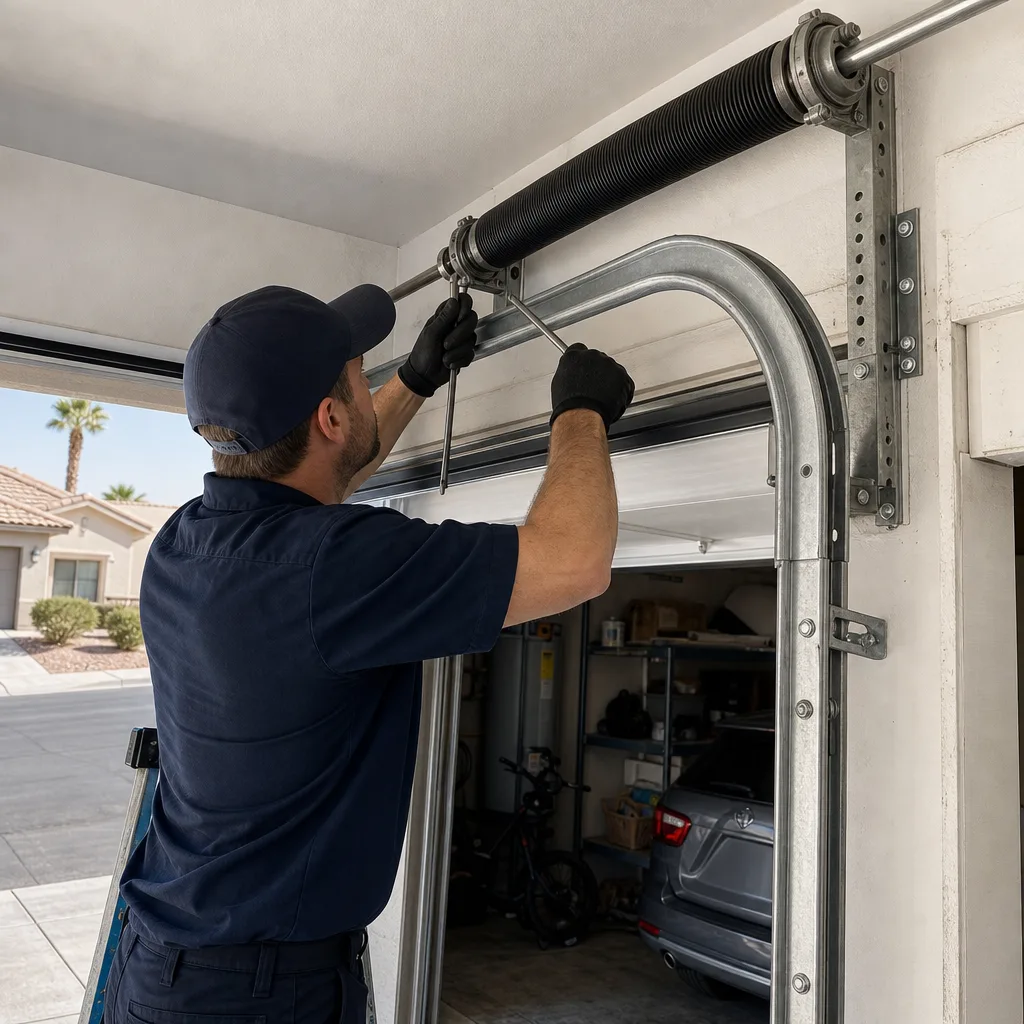
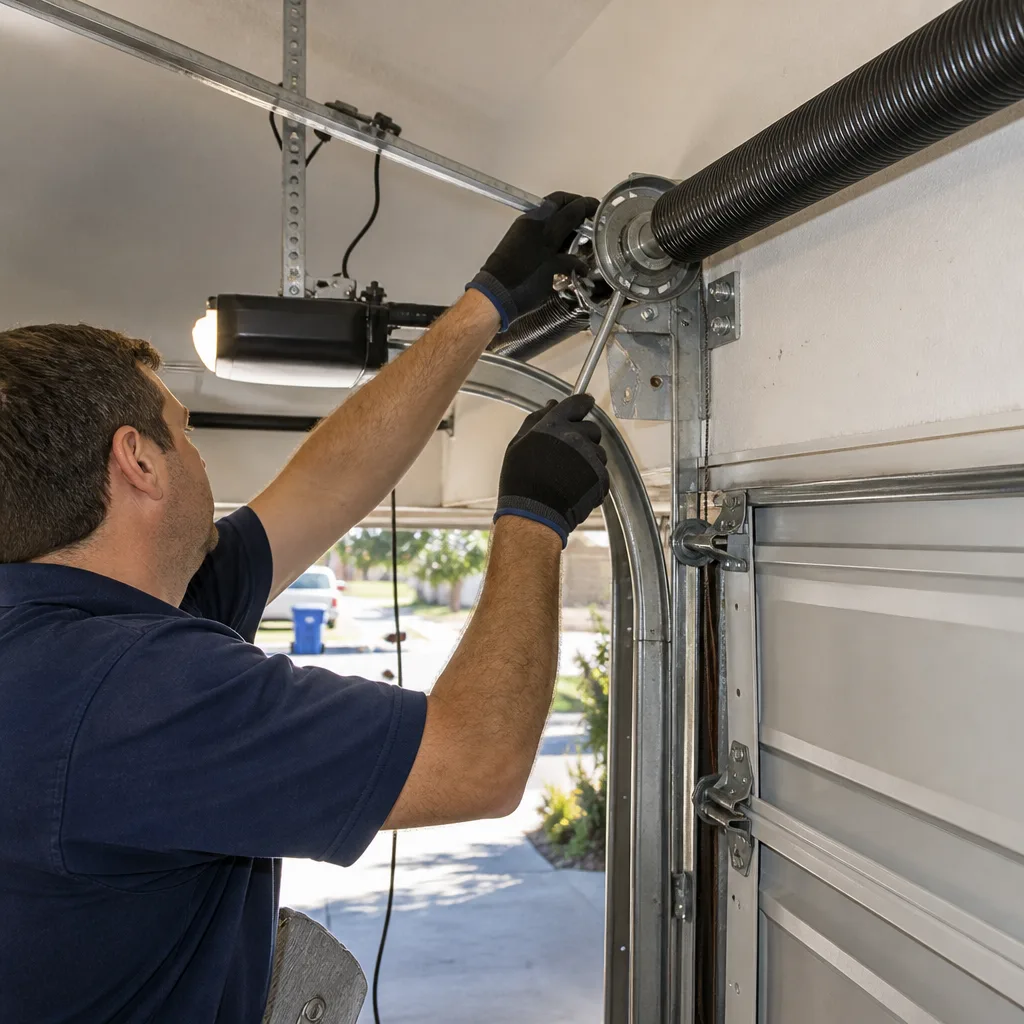
Henderson’s heat is brutal on torsion springs. The constant expansion and contraction of desert temperature swings, where a garage can be 35 degrees on a winter night and 130 degrees by a summer afternoon, fatigues spring steel faster than steady climates. We see failures in Green Valley and Anthem in as little as five years when the national average sits closer to seven to ten. Replacement requires winding the new spring to a precise quarter-turn tolerance. The winding bars used to load the spring are 18-inch steel rods rated for the job. An ordinary screwdriver or a length of pipe is not an acceptable substitute, and using one is how forearms get broken. This is the single most dangerous repair on the entire door system. We handle it professionally, with the right bars, the right PPE, and the right respect for the energy involved. The cost in Henderson ranges from $180 to $340 per spring depending on spring size, cycle rating, and whether the spring is on the high-cycle end for doors that see more open-and-close cycles.
Lift Cable Replacement
The lift cables attach the bottom of the door to the spring system. When a cable frays or snaps, the door becomes severely unbalanced and can drop suddenly. Replacing a cable requires releasing the spring tension, the same tension that makes torsion spring replacement dangerous. There is no safe middle step. This is a professional job for the same reason the spring is.
Track Realignment
Garage door tracks must be plumb and parallel within an eighth of an inch over their full height. A door that rattles, scrapes, or leans may have a track that’s twisted or out of alignment. Fixing it involves loosening the track brackets, resetting the alignment, and confirming the door travels smoothly through the full cycle. If the track is on the side of the door that carries the cable, the tension must be managed. Even when the track is on the non-cable side, an improperly aligned track can cause the door to bind and throw a cable off its drum, turning a simple alignment into a dangerous jam. We recommend professional track work for any adjustment that involves the bracketry.
Panel Structural Repair
Henderson’s 60-mile-per-hour gusts during monsoon season can twist a door panel enough to crack it along the stiles. When a panel structurally fails, the door’s integrity is compromised. Depending on the damage, a panel replacement may make more sense than a full door replacement. The work involves lifting panels under spring tension and matching the panel profile to the existing door, which is why it’s a professional job. Brands like Clopay and Amarr have specific panel profiles that don’t interchange, so matching the replacement to the original matters.
Bottom Bracket Replacement
The bottom bracket holds the lift cable and the bottom roller. It also carries the full weight of the door on the cable side. The bracket is bolted to the door, and replacing it requires the same tension release as cable work. This bracket is under the most stress in the system, which is why it fails more often than any other bracket.
These are the jobs where the energy in the system is real and the consequence of a mistake is immediate. They aren’t a test of character. They’re a question of whether the savings are worth the risk. For most Henderson families, they’re not.
Real Cost Comparison for Henderson Homeowners
DIY garage door work is often presented as saving hundreds of dollars. For the four safe tasks, that’s true. For spring and cable work, the economics shift once you account for everything you must buy, borrow, or risk.
DIY Maintenance Task Costs
| Task | DIY Cost (Henderson) | Professional Cost (Henderson) |
|---|---|---|
| Weatherstripping replacement | $12 – $25 | $60 – $90 |
| Full lubrication service | $8 – $15 (lubricant only) | $75 – $125 |
| Sensor realignment | $0 | $65 – $95 (service call) |
| Remote programming | $0 (with existing remote) | $35 – $60 |
The safe tasks genuinely favor DIY. The parts are inexpensive, the risk is low, and the time commitment is under an hour for a first-timer. A homeowner who does their own lubrication and weatherstripping in Henderson saves $100 to $200 a year over paying for seasonal tune-ups.
DIY Spring Replacement: The Real Numbers
| Item | Cost Range |
|---|---|
| Correct torsion spring for a 16-foot door | $60 – $120 |
| Pair of professional winding bars | $35 – $60 |
| Two new lift cables (recommended while spring is down) | $25 – $45 |
| Safety glasses and work gloves | $20 – $40 |
| Socket set with deep sockets | $40 – $100 |
| Time off work or weekend given up | 4 – 6 hours |
| Emergency room visit if a winding bar slips | $1,500 – $5,000 (with insurance deductible) |
The parts alone approach the lower end of a professional service call. The tools you don’t currently own add another $100 to $200. The risk, if the spring releases improperly, ranges from a re-do of the entire job to a fracture, concussion, or laceration. An ER visit in Henderson with insurance starts around $1,500 out of pocket. Without insurance, a broken wrist that requires surgery runs $15,000 to $30,000. The professional service at $180 to $340 starts to look very reasonable.
What We Charge
Our Garage Door Spring Repair in Henderson pricing is quoted up front in writing before any work begins. Our technicians arrive with the springs, cables, and tools to do the job right, and the price we give you before we touch the door is the price on the invoice when we leave. There is no second call because the first one was done wrong, and there’s no risk to you beyond writing a check for a number you already saw and approved.
How Henderson Heat Changes Garage Door Work
Henderson’s climate is not a backdrop to garage door maintenance. It is the primary variable. The Mojave Desert’s temperature range, UV intensity, and wind patterns all act on the door’s components in ways that determine whether a repair works or fails.
Lubrication Timing
Metal in a Henderson garage in July can reach 140 degrees by mid-afternoon. Lubricant applied to a hot hinge or roller thins out and runs off the part before it penetrates. The same lubricant applied at 7 AM, when the metal is still holding the night’s cool, soaks into the bearing surfaces and creates a film that lasts through the heat. If you only remember one thing about garage door maintenance in Henderson, remember this: lubricate early or lubricate late, never at 2 PM in August.
Spring Fatigue
Garage door springs are rated for a specific number of cycles, typically 10,000 for standard springs and 20,000 to 30,000 for high-cycle springs. That rating assumes relatively stable temperatures. Henderson’s daily temperature swings force the spring steel through repeated expansion and contraction cycles on top of the mechanical cycles. The result is that springs in Henderson often fail before their rated cycle count, especially springs that are under-lubricated or exposed to direct sun through uninsulated garage doors. Amarr and Clopay doors with torsion springs located above the opening stay cooler when the garage is insulated and the door is light-colored, which extends spring life by two to three years in our experience.
Roller and Hinge Wear
The dust that blows through Henderson during spring windstorms works its way into roller bearings and hinge pivots. Combined with heat-thinned lubricant, the result is accelerated wear. Rollers with nylon coatings last longer in this environment than all-steel rollers because the nylon surface tolerates dust and heat better. When you lubricate, take an extra 30 seconds to wipe the rollers and hinges with a rag first. The residue that comes off is the grit that was grinding against the metal.
Weatherstripping Lifespan
Henderson’s UV index is among the highest in the country. Rubber and vinyl weatherstripping absorb that UV and break down from the outside in. A bottom seal on a south-facing door in Henderson lasts less than two years before it flattens and splits. Side seals last longer but shrink from the heat. Checking the weatherstripping every spring and fall is a realistic sweet spot for this climate.
The Safety Baseline: Tools and Equipment Before You Start
For any garage door work you decide to tackle yourself, there is a minimum baseline of tools and safety equipment. This is not a gatekeeping list. It’s the honest floor for working on a system that holds a 150 to 300 pound door overhead. Below this baseline, you’re not saving money. You’re borrowing risk from your future self.
The Minimum Tool List
- Safety glasses. Every task, no exceptions. Rust, grit, and metal shavings fall from garage doors in quantities that surprise people.
- Work gloves. The phrase “pinch point” exists because garage doors have edges that close with hundreds of pounds of force. Gloves don’t make you invincible, but they reduce the damage from the small pinches and cuts that happen to everyone who works on doors.
- A stable ladder. Not a chair, not a step stool, not the roof of the car. A fiberglass or aluminum A-frame ladder rated for your weight, set on a level, clean surface.
- Socket and wrench set. Garage door hardware is mostly 7/16, 1/2, and 9/16 inch. A basic socket set with deep sockets covers almost everything.
- White lithium grease. For metal-on-metal contact points. Not WD-40, which is a cleaner and water displacer, not a lubricant.
- Silicone spray. For rollers, hinges, and non-metal contact surfaces.
- Clean rags. More than you think. The grease never ends.
- A second person. For any task involving the door panel, an extra set of hands and eyes matters. The door is heavy enough to cause injury if it falls uncontrolled.
What Never to Use
A screwdriver is not a winding bar. A ratchet extension is not a winding bar. A piece of rebar from the last concrete pour is not a winding bar. Professional winding bars are 18 inches long, half an inch in diameter, and made of a steel alloy designed to handle the torque without bending or snapping. If you are not willing to buy the correct tool for torsion spring work, you are not doing torsion spring work.
For opener and track work, make sure the power is disconnected before you touch anything. Unplug the opener or switch off the breaker, then place a piece of tape over the switch so no one plugs it back in while your hands are in the mechanism. In Henderson, where the garage is often the only workshop in the house, kids and spouses walk through without thinking. The tape is cheap insurance.
After a Failed DIY: What to Tell the Technician
We receive these calls. The homeowner took the cover off the torsion spring assembly, got partway through the winding process, heard a loud crack, and now the door is stuck halfway open with a cable off the drum and a spring that’s partially unwound. Nothing about this is shameful. The important thing is that you stop and call. What you tell us when you call determines how efficiently the repair goes.
Be Specific About What You Touched
Tell us honestly which parts you adjusted. “I tried to wind the left spring and the winding bar slipped” is very different from “I opened the cover and didn’t touch anything.” Both descriptions have different implications for what we’ll find when we arrive. We are not here to judge the attempt. We are here to fix the door, and accurate information saves us time and saves you money. Our Garage Door Repair in Henderson service starts with a full assessment of the current state of the system, including what was touched before we arrived.
Describe the Door’s Current Position
Is the door closed, fully open, or stuck somewhere in between? Is one side higher than the other? Are the cables still on the drums on both sides, or has one jumped off? Is the spring still in its bracket or is it hanging loose? These details tell us what tools and parts to bring and help us estimate the labor time before we arrive. A door stuck open leaves the garage, and often the house, exposed. A door stuck closed traps the car inside. Both are different problems with different urgencies.
Tell Us What Sounds You Heard
A single loud crack followed by silence usually means a spring snapped. A grinding sound during the door’s last few cycles points to roller or hinge failure. A popping sound from the track area often means a cable jumped off the drum. If you saw sparks or smelled burning plastic from the motor unit, that’s an electrical problem in the opener, and you should leave the opener unplugged until we arrive. Describing the sounds accurately lets our technician prepare the right parts and approach before they ring the doorbell.
The call to make is (775) 458-7045. A live person answers around the clock, no voicemail trees.
Common Mistakes to Avoid
- Using WD-40 as a lubricant. WD-40 cleans and displaces water, but it leaves behind almost no lasting lubrication. The door quiets down for two days, then the metal-on-metal wear returns worse than before because the thin film has collected dust. In Henderson, that dust combines with the heat and creates a gritty paste inside the hinges.
- Adjusting the limit screws on the opener to fix a door that is binding. The limit screws control how far the opener travels, not what’s causing the door to stop mid-cycle. If the door is binding on a worn roller or a dirty track, adjusting the limits just moves the stopping point. The underlying problem stays.
- Replacing one spring instead of both. Garage door springs are rated for the same number of cycles, and they usually wear out within months of each other. Replacing one spring leaves you with an unbalanced door, which wears the opener motor and the other components faster. In Henderson, where spring fatigue is accelerated, the second spring usually fails within a year.
- Lubricating the rollers and then closing the door immediately. The lubricant drips down and coats the track. The next time the door opens, the rollers slip instead of rolling, and the door jerks. Lubricate, then run the door through a full cycle two or three times to distribute the lubricant evenly before you walk away.
- Over-lubricating the spring. The torsion spring needs a light, even coat, not a flood. Excess grease collects dust and clumps up between the coils, which interferes with the spring’s ability to wind and unwind smoothly. A three-second spray along the top and bottom of the spring is enough.
- Assuming a new battery fixes a remote that is not working. If the remote programs but the door still doesn’t respond, check the small lock button on the wall console first. Many Henderson homeowners accidentally activate the child lock, which disables all remotes and keypads, and then spend an hour troubleshooting a problem they don’t have.
- Winding a torsion spring with the garage door open. The spring should only be wound when the door is in the closed position, where the springs carry the least tension. Attempting a winding operation with the door up changes the geometry and increases the risk of the spring unloading violently.
When to Call a Professional
Call when the spring is involved, in any capacity. Call when the cables are frayed, when the track is bent or twisted, or when the door doesn’t sit level in the opening. Call when you’ve started a repair and realized halfway through that the job is bigger than the YouTube video made it look. Call when the door makes a sound you’ve never heard before and you can’t identify the source. Call when the job involves overhead weight, stored energy, or sharp edges moving fast. For everything else, the careful homeowner can handle it with the right materials and a Tuesday-morning window before the Henderson heat sets in. If you’re unsure whether your project needs a permit, review Garage Door Permits, Codes & Inspections in NV: What You Need to Know.
We’ve built our Fernbrook Garage Doors Henderson home service around the idea that a garage door is more than a door. It’s the entrance to the workshop, the kid’s bike storage, the dog’s napping spot, and the car’s shelter. What we do inside that space, and how we leave it, matters. Shoe covers on hardwood, drop cloths on tile, quiet tools when the kids are asleep, and a photo of the clean-up before we go. We provide written pricing up front, before any work begins, every visit, no exceptions. The 365-Day Done Right Promise stands behind every job.
If you’re looking at a job you’d rather not do yourself, Fernbrook Garage Doors Henderson offers free estimates in Henderson. Call (775) 458-7045 and a live person will answer around the clock.
Frequently Asked Questions
You can safely replace weatherstripping, lubricate hinges and rollers, realign safety sensors, and program remotes or keypads. These tasks don’t involve the spring, cables, or tracks, which is where the serious energy lives. In Henderson, do the lubrication in the early morning when the metal is cool, and expect to replace weatherstripping every two years because of the sun and dry air.
Professional torsion spring replacement in Henderson typically costs $180 to $340 per spring depending on size and cycle rating. The DIY attempt costs $120 to $325 in parts and tools, plus the risk of serious injury if the spring releases improperly. Call (775) 458-7045 for a written quote before any work begins.
Yes. A torsion spring under full tension stores enough torque to break bones or cause severe lacerations if the winding bar slips. Extension springs can release and fly across the garage at high speed. There is no safe way to release that energy without the proper winding bars, training, and respect for the mechanism. This is the one repair we tell every homeowner to leave alone.
The Mojave Desert’s heat, UV, and dust accelerate wear on every rubber, plastic, and spring component. Springs fatigue faster from daily temperature swings that can exceed 100 degrees. Lubricant degrades faster in the heat. Weatherstripping cracks faster under intense sun. The maintenance schedule that works in a coastal climate is not enough for Henderson. Plan on lubricating every six months and inspecting the seals every spring and fall.
In many cases, yes. Emergency service is available around the clock, and a live person answers the phone at (775) 458-7045 any hour, day or night. If the door is stuck open and the garage is exposed, we prioritize the call. Our technicians carry the common parts on the truck so most repairs are completed in a single visit.
No. The written price you receive before we start is the price you pay when we’re done. We assess the door, identify the problem, and give you the number in writing before any work begins. There are no surprise invoices, no add-on charges discovered at the end, and no negotiation required. The 365-Day Done Right Promise backs every job, which means if it’s not right, we make it right.
The Bottom Line
The DIY-versus-professional question for garage doors comes down to one boundary: energy. Tasks that don’t involve stored force are safe, affordable, and satisfying for a careful homeowner. Tasks that involve springs, cables, or the structural weight of the door belong to a professional. Henderson’s climate quietly accelerates wear on every component, which means the need for maintenance arrives sooner and more often than in milder markets.
When the job calls for a professional, the choice is Garage Door Installation in Henderson or repair done with the same care you’d want in your own home: written pricing, shoe covers, quiet tools, a clean-up photo, and a promise that if it’s not done right, we make it right. That’s the standard we were built on, and it’s the standard we bring to every Henderson garage we step into.
Written by Jesse Calder, Owner at Fernbrook Garage Doors Henderson, serving Henderson since 2002.
See the difference
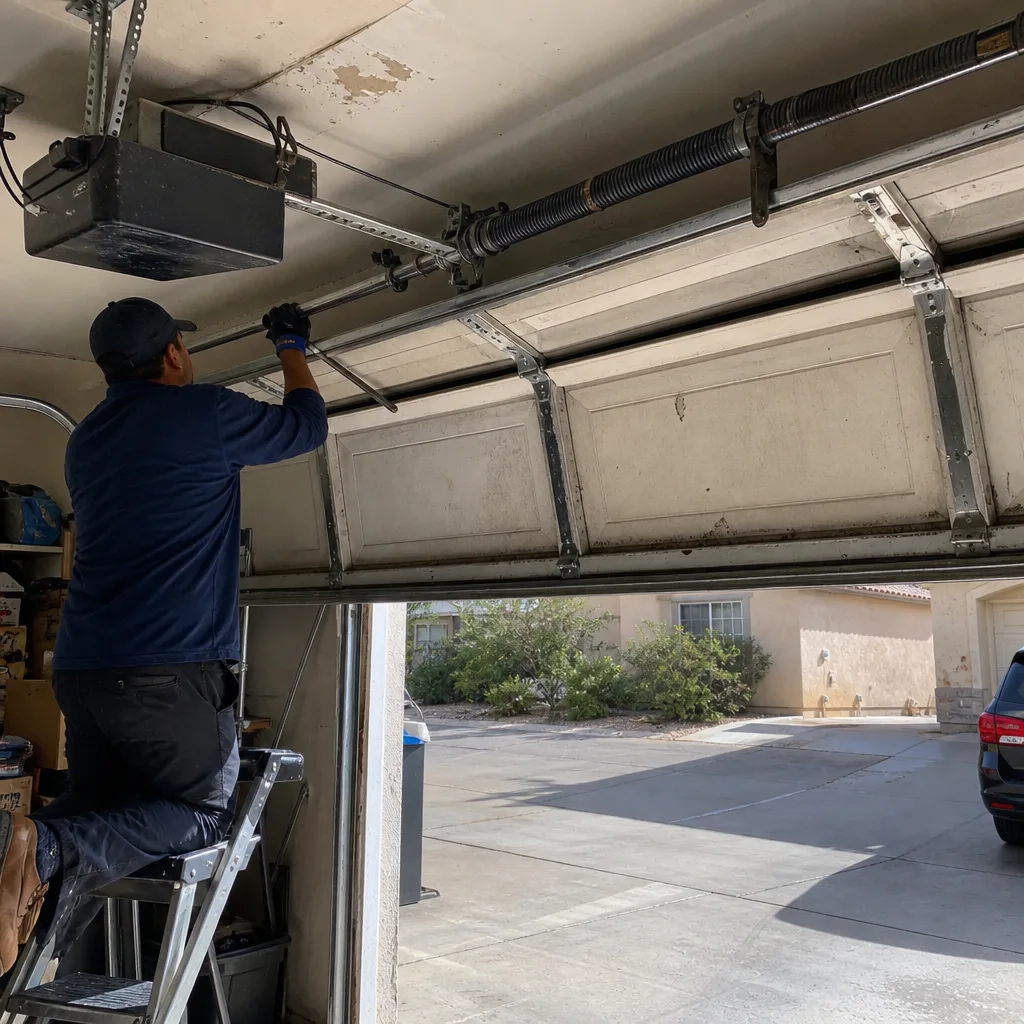 Before
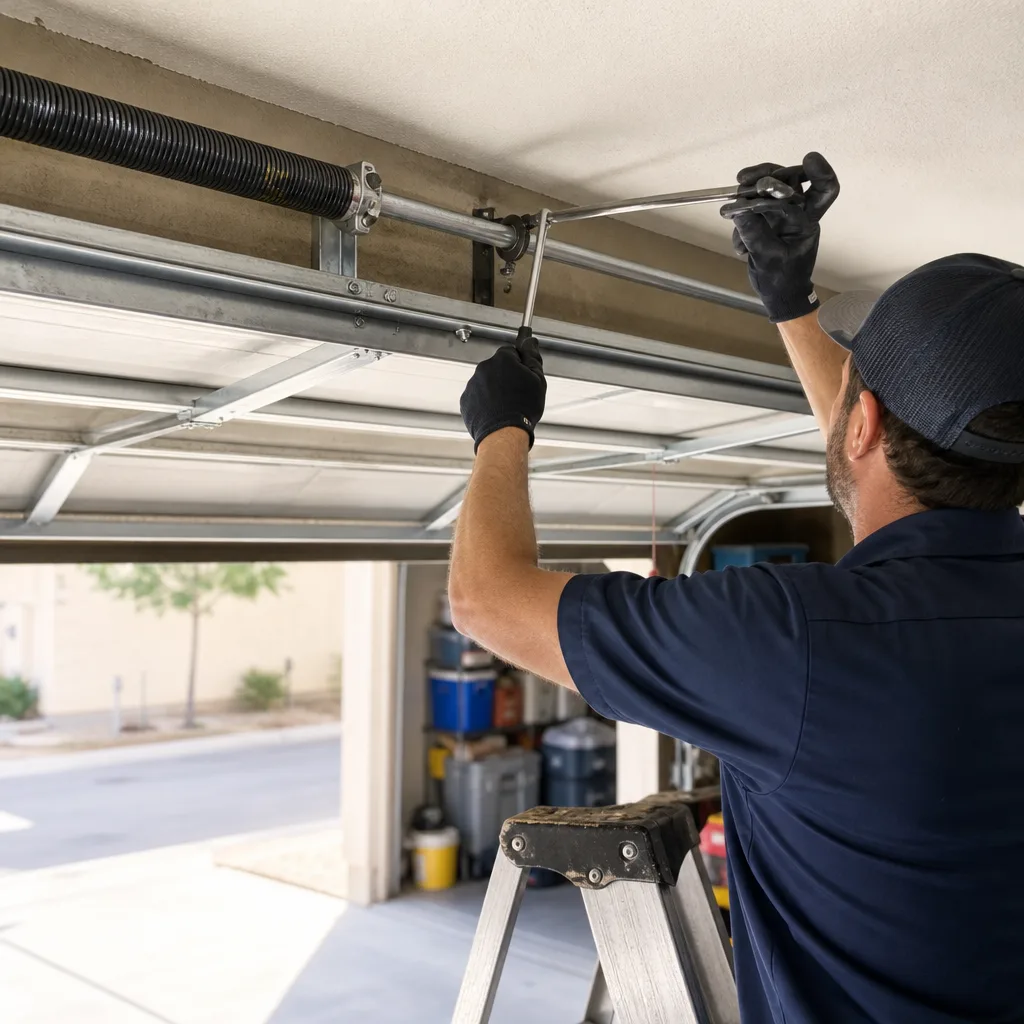 After
After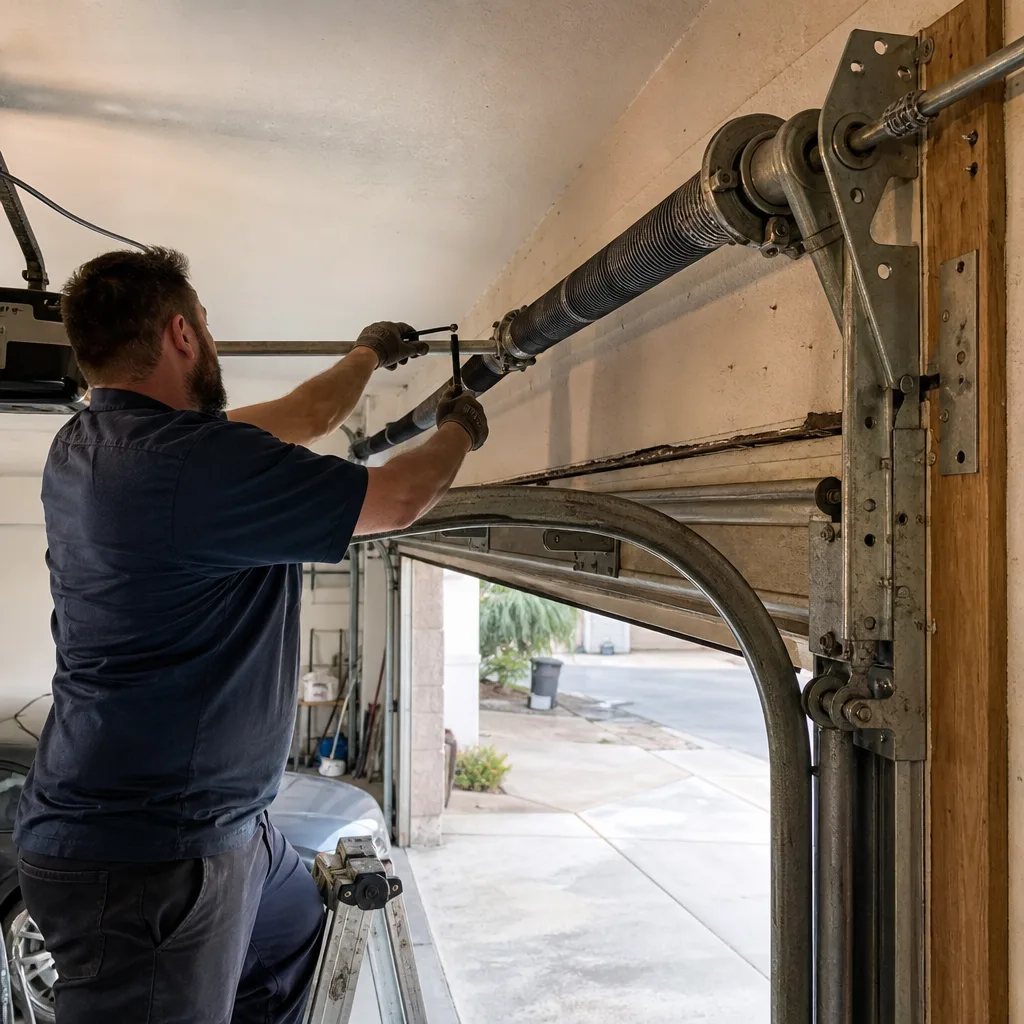 Before
 After
After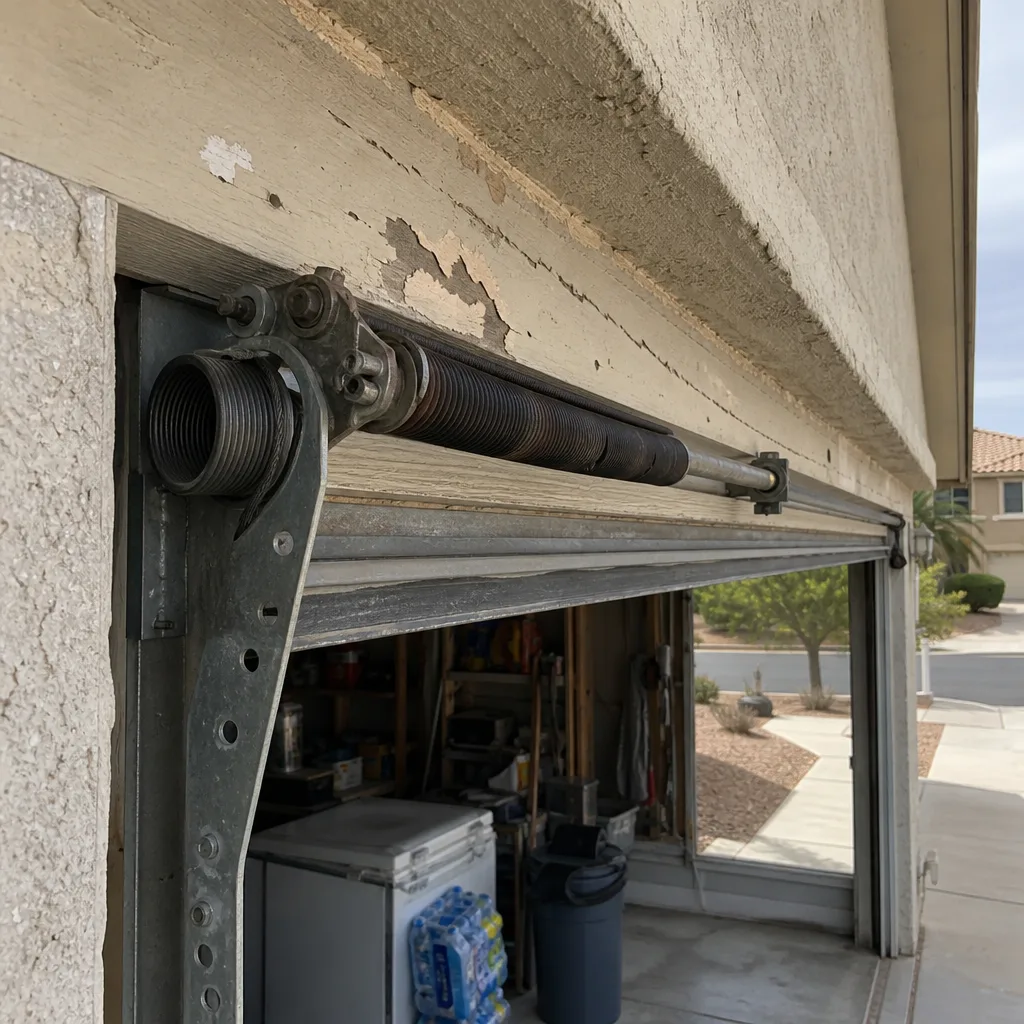 Before
 After
After